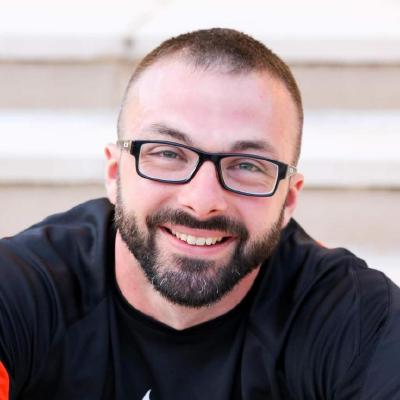

Biography
Transitioning careers is hard in almost the same way that convincing four opinionated daughters to color-coordinate their clothing is hard. Well, come to think about it, changing careers is probably easier!
Professional Journey
While still in grade school, I wanted to be a designer. I made blueprints of houses, rockets, and rubber band guns. I fell in love with the ruled lines and engineers’ handwriting. I found old dusty drafting books at the library and practiced drawing the examples.
However, while I was passionate about design, life had other plans. My Dad was building his custom cabinet business in our two-car garage and so it was a given that my first job would be helping him get that off the ground. Although it wasn’t my path of choice, I learned how to build and install cabinets. I took an interest in the cabinet design process and as I and my dad iterated on our technique, I began to realize that design is more than lined paper and dividers.
The cabinet shop grew quickly, and my dad decided to purchase a CNC router to improve accuracy and speed. With the purchase of the CNC router, we received a week of training, and I believe that week of learning how to program machines was what initially hooked me on programming. Naturally, to use the CNC router for parts we needed CAD software for design. That first CAD package was my happy place. I spent hours dreaming, designing parts, and cutting them out. The internet was becoming much more accessible and with the help of forums and tutorials, I was able to teach myself to design as well as automate some of those designs with scripts that I wrote. Around that time, I started to explore mainstream programming languages and took a few courses in C# and HTML/CSS.
As the years went by I got married and we started a family, and although the passion for programming and CAD design didn’t fade, the demands of marriage, a mortgage, and raising a family took precedence. I was working 50–60 hours a week in the cabinet shop and that didn’t leave me much time to pursue other ideas, but our financial foundation was beginning to strengthen. Learning better money management skills and paying off our house five years early gave me the space to start thinking about new possibilities. I learned how to manage my time better, and the once overwhelming startup costs of building a family began to settle into more manageable maintenance costs. At that point, I started to think more seriously about my passion for programming and design.
Current role and expertise
In 2022, my dad decided it was time to build a new shop and move out of the one that we had leased for 18 years. He built a 10,000-square-foot shop double the size of our old one. This expansion allowed us to redesign and improve our workflow based on our years of experience. He also wanted me and my two brothers to start taking over more of the responsibilities of running the shop. Since I had been involved with every area of the business and understood the workflow from design to delivered product, the next logical step was to take responsibility for production management.
Although not a manager by nature, I decided that with enough time and the right information, I could learn anything. I spent a lot of hours studying what it means to be a manager as well as the practical details of managing workflow to meet deadlines. I discovered Eliyahu Goldratt’s work which was the missing piece that I needed to understand managing in a production environment. I learned the importance of maintaining a good relationship with employees and how that affects output. I also discovered that satisfied employees in a positive work environment are key to producing quality products.
My role in management and continued work in CAD and automation have given me a unique perspective on the intersection of technology and leadership. Navigating the intricate connection between design and manufacturing has served to strengthen my technical skills and has only deepened my passion for creating more capable software solutions. I have thought about different ways to improve on the available software solutions, as well as how to create a few new ones.
Looking back, what seemed like a diversion from my vision was actually a rich learning opportunity. While going from high school straight into the design and engineering fields might have seemed more straightforward, I would have missed the experience and understanding that I gained over the past twenty years. Now I can approach technology with a deeper understanding of its real-world application and how to develop it to serve the people who use it.
Personal values
Experience shapes us in profound ways, and while self-description can be challenging, there are fundamental principles that have shaped my approach to work and life. Beyond skills, these are the core values that define my professional integrity and personal character.
Honesty is a foundational part of all meaningful relationships. It is more than simply telling the truth, it is about creating an environment of trust and openness. Genuine honesty encourages credibility in both business and personal interactions. When your word can be depended on, you will no longer be just another employee or contractor, you will become a trusted and valued partner whose opinions can be respected.
A fair day’s work is a commitment of trust. While on the clock, I recognize that someone is trusting me to put forth my full professional effort. Using work hours for anything other than my best effort sabotages the potential of my employer, my colleagues, and ultimately myself. The goal is to use the resources entrusted to me to create something of value not to just take up space and waste occupy time.
To become a professional means taking a journey of growth and self-improvement. Creating value means maintaining a constant learner’s mindset for areas to improve, constantly reassessing my approach, and taking critical feedback seriously. Useful criticism is an opportunity to grow, and positive feedback is an opportunity to celebrate the wins.
Beyond the office
Trail running has been my place of meditation and resilience training. Early morning runs are more than just exercise, they are a time to reflect and sort out life’s priorities. My longest run was a 50k on the Appalachian Trail, nine painful and mind-numbing hours, and taught me more about persistence and mental fortitude than any other thing I have ever done.
Cooking is my creative space and, although not much of a smoking or grilling type of guy, I find joy in simple foods. My passion is pizza, and I have come very close to the perfect pie! The goal is always for the meal to be enjoyable and create an environment of bonding and trust.
My greatest joy and priority is to be a great husband to my wife and an awesome dad to my four daughters. Although it’s not always clear what it means to be all of those things, I am committed to learning how to provide the best life I can for each one of them.
Skills and expertise
I have often wondered what it means to be a master craftsman. While lists of tools and technologies on a resume look impressive, my experience has shown me that true expertise is better measured by what is created with those tools.
Over the years I have used various CAD packages, office applications, and programming languages. Whether designing a boat, a presentation, or writing parametric scripts for parts lists, my focus has always been on the quality of the finished product rather than on the tool itself.
Now as I am navigating a software engineering degree, this philosophy has been strengthened. It is not particularly hard to create software, especially with the advances in tech that currently exist, but engineering well-crafted software that solves a real problem is difficult to do well. It requires iterating on feedback and observations, creating simple solutions that match the problem, and dedication to producing excellent results. Learning a programming language is not that difficult, you can be functionally proficient in a few weeks. The real challenge lies in your approach to problems and crafting solutions.
A tool is only as valuable as the solution you created with it. My strength is not in the number of tools that I have used but in my ability to select the right tool for the job and learn that tool quickly to build a meaningful solution. I’ve learned to be a builder first and a toolmaster second.
Closing and contact
My journey from craftsman to technology professional has taught me that the best solutions are a combination of experiences and innovation. If this perspective resonates with you, I would welcome the opportunity to connect.
You can reach me using the contact information below. Let me know what your story is or how we could collaborate on your project.
Contact
I would enjoy hearing from you!
If you want to tell me your story or chat about a project. Email me with the link below.
 Send me an email